
website migration services Ireland
Website migration services in Ireland for controlled WordPress, hosting, domain and platform moves.
I inventory the current website, define what must move, prepare the destination, map affected URLs and test the launch across content, forms, tracking and search signals. The scope distinguishes a same-domain hosting transfer from a domain or platform migration, because each has different DNS, redirect, email, SEO and rollback risks.

Irish businesses moving a WordPress website to a new host, changing a domain, consolidating URLs or transferring from another platform without treating migration as a simple file copy.
Overview
A website migration is a coordinated change to systems, URLs and ownership—not just copying WordPress files.
Migration can mean moving an unchanged WordPress site to a new host, changing its domain, converting a non-WordPress website, consolidating several websites or rebuilding content under a different URL structure. A host move that preserves every public URL mainly requires infrastructure preparation, data transfer, DNS control and functional testing. A move with URL changes also requires an old-to-new map, direct permanent redirects, updated canonicals, internal links, sitemaps and search monitoring. Platform moves add content modelling, media, forms and feature parity. The safest plan changes only what the project needs, confirms account ownership and records the old state before launch. It also recognises that DNS propagation, third-party systems and search-engine processing are not fully controlled by the developer. Careful migration can reduce avoidable disruption; it cannot promise zero downtime, unchanged rankings or an instant transfer of every external signal.
The problem
Migration failures often come from missing dependencies and assumptions outside the visible pages.
Who this is for
Who Website Migration Services Ireland is designed for
WordPress websites changing host
For businesses keeping the same domain and public URL structure while moving files, database and configuration to a more suitable hosting environment.
Businesses changing domain or URL structure
For moves where important old pages need mapped destinations, direct redirects and coordinated Search Console, sitemap and internal-link updates.
Websites moving to WordPress
For organisations transferring suitable content, media and functionality from another CMS or builder into a maintainable WordPress structure.
What this includes
What a controlled website migration can include
The exact scope depends on your website, goals and budget, but this gives you a clear starting point.
Migration goals and account ownership
Confirm why the move is happening, what must stay unchanged, who controls the domain, hosting, DNS, email and website accounts, and which parties must approve launch.
Current website and dependency inventory
Record public URLs, content types, media, database, forms, integrations, users, licences, analytics, consent tools, scheduled processes and representative search evidence before transfer.
Destination and compatibility review
Check the target hosting or WordPress environment for software versions, storage, certificates, caching, email method, server behaviour and resources required by the agreed website.
Backup and rollback preparation
Create or verify suitable copies of files and data, record the old configuration and define how traffic or data will be restored if a critical launch issue cannot be corrected safely.
Content, database and media transfer
Move the agreed WordPress installation or migrate selected content and files, then handle environment-specific paths, references and permissions without silently discarding unsupported items.
URL inventory and redirect mapping
Match old URLs to equivalent new destinations, identify deliberate removals and prepare direct server or platform redirects instead of sending unrelated pages to the homepage.
Technical SEO migration controls
Update canonicals, internal links, robots rules, indexation directives, sitemaps, structured data and relevant Search Console properties to reflect the intended public website.
DNS, SSL and domain coordination
Plan necessary DNS and certificate changes with suitable access and record backups, while identifying email or third-party records that must remain unchanged or be handled separately.
Functional and responsive testing
Check representative pages, navigation, images, downloads, forms, search, accounts, payments, scripts and mobile layouts in staging and again on the production domain.
Analytics, consent and integration checks
Confirm required tracking, consent behaviour, verification, API callbacks, SMTP or transactional services and external connections use the correct production URLs and credentials.
Launch validation and monitoring
Test priority old and new URLs, redirects, status codes, indexation controls and customer actions after launch, then record issues and monitor agreed search, crawl or server signals.
Benefits
What your business should gain from this service.
A defined inventory of what must move
Fewer avoidable broken URLs and missing assets
Clearer domain, hosting and email ownership
A tested destination before traffic changes
Documented launch and rollback responsibilities
Post-migration checks tied to important customer journeys
Process
A migration process from inventory and mapping to launch monitoring.
Clarify the migration type, destination, business reason, required continuity, account ownership, launch constraints and whether design or content changes are outside the move.
Inventory the current website, public URLs, content, data, software, integrations, DNS, email dependencies, analytics and search evidence needed for planning and comparison.
Prepare the destination, migration method, URL and redirect map, backup, rollback route, testing cases and responsibilities for host or third-party actions.
Transfer and configure the agreed website in a safe environment, update environment-specific references and test representative content, functions and administrative workflows.
Schedule and execute the production move, coordinate database or content synchronisation where needed, apply DNS or redirect changes and validate priority journeys immediately.
Monitor errors, redirects, availability, forms, analytics, sitemaps and Search Console evidence, then close the project only after known issues and remaining ownership are documented.
Pricing guidance
Website migration pricing based on URLs, data, systems and launch risk
A contained WordPress host transfer with unchanged URLs is not equivalent to a domain move, ecommerce migration or conversion from another CMS. Pricing reflects the website size, content and database volume, access quality, email and DNS dependencies, URL mapping, integrations, downtime tolerance and post-launch support. Third-party hosting, domain, premium-plugin and email charges remain separate unless the proposal includes them.
Migration Review and Plan
For inventorying an existing website, defining the migration type and identifying URL, access, DNS and functional risks before launch.
- Current-site inventory
- Migration and redirect plan
- Risks and implementation estimate
Focused WordPress Migration
For a suitable WordPress website moving host while retaining the domain and agreed public URL structure.
- Files and database transfer
- Destination configuration
- Launch and priority checks
Domain, Platform or Ecommerce Migration
For domain changes, URL restructuring, CMS conversion, stores or migrations involving substantial content, data and integrations.
- Custom mapping and scope
- Staged functional testing
- Redirect and monitoring plan
Official website-migration guidance
Map URLs, use direct redirects and monitor both sides of a site move.
Google’s site-move guidance recommends preparing the destination, mapping old URLs to new destinations, using server-side permanent redirects, updating internal signals and monitoring the migration through Search Console.
Read Google’s site-move guidanceReview the WordPress migration guide
Related work
Relevant WordPress experience where stable routes and controlled releases matter
Irish information resource
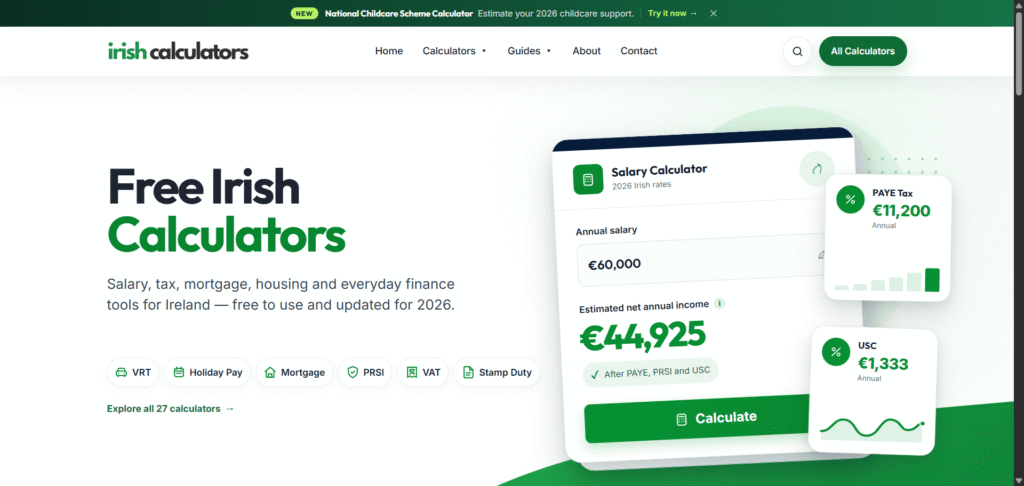
Irish Calculators
A growing resource where reliable pages, clear routes and careful changes help visitors continue to find useful information. View case studyRelated services
Other services that may support this project.
FAQ
Common questions about website migration.
What is included in a website migration?
The agreed scope can include website and URL inventory, backups, destination setup, files and database transfer, content or media migration, redirects, DNS and SSL coordination, functional testing, SEO controls and post-launch monitoring. Email and external systems are included only when stated.
Can you migrate my WordPress website to a new host?
Yes. A same-domain host migration can transfer the WordPress files, database and configuration to a suitable destination, then coordinate DNS and test the public website. Hosting compatibility, email records, licences and access are reviewed first.
Can you move my website to a new domain?
Yes. A domain move requires control of both domains, a URL map, permanent redirects, updated canonicals and internal links, Search Console preparation, DNS coordination and monitoring. The old domain should remain available to serve redirects for an appropriate period.
Can you migrate a website from another platform to WordPress?
Potentially. The content types, media, URLs, forms, ecommerce data, accounts and integrations must be reviewed before deciding what can be imported, rebuilt or retired. Platform-specific features may require custom development or a separate redesign scope.
Is website migration the same as website redesign?
No. Migration moves an agreed website, content or platform state and protects its technical continuity. Redesign changes the structure, presentation, content or customer journey. They can be combined, but separating the decisions reduces risk and makes responsibilities clearer.
Will a website migration affect SEO?
Search visibility can fluctuate, especially when domains or URLs change. Careful inventory, equivalent destinations, direct permanent redirects, updated internal signals and monitoring reduce avoidable risk, but no provider can guarantee unchanged rankings or how quickly search engines process a move.
Will there be downtime during the migration?
The aim is to minimise disruption through staging, preparation and a controlled cutover, but zero downtime cannot be guaranteed. DNS behaviour, database changes, third-party services and unexpected environment differences can affect the launch window.
Does website migration include business email?
Not automatically. Website hosting and email may share DNS but are different systems. Existing mail records must be protected during a website move, while mailbox transfer, archives, devices and user support require an explicitly defined email-migration scope.
How much does website migration cost in Ireland?
A Migration Review and Plan starts from €250, and a focused same-domain WordPress migration starts from €499. Domain, platform, ecommerce and integration-heavy migrations are quoted after the website, URLs, data, access and launch risks are reviewed.
Next step
Need this service for your business?
Send me your website link or project idea and I will suggest the most practical next step.