conversion rate optimisation Ireland
Conversion rate optimisation in Ireland for clearer journeys and better website actions.
I review how suitable visitors move from a landing page to an enquiry, booking, call or purchase, then identify the message, trust, usability, form, technical and measurement problems that may be creating friction. The work is evidence-led and proportionate to your traffic—it does not promise an invented conversion uplift.

Irish service businesses, ecommerce websites and campaign teams that receive relevant traffic but need clearer evidence about why visitors hesitate or abandon important actions.
Overview
Conversion rate optimisation starts by defining what a useful conversion actually is.
A conversion is a meaningful action that supports the business: a qualified form enquiry, phone call, WhatsApp conversation, appointment, quote request, account registration or completed purchase. Conversion rate is normally calculated by dividing the number of conversions by the relevant visits or users and multiplying by 100, but the number is only useful when the action, audience, date range and measurement method are consistent. A higher rate is not automatically better if lead quality falls or important customers are excluded. Practical CRO connects measurement with customer intent, landing-page relevance, message clarity, proof, mobile usability, accessibility, performance and the effort required to complete the next step.
The problem
More traffic cannot fix a journey that is unclear, untrusted or difficult to complete.
Who this is for
Who Conversion Rate Optimisation Ireland is designed for
Service websites with relevant traffic
For businesses receiving visits but too few suitable calls, quote requests, bookings or form enquiries from important pages.
Landing pages and paid campaigns
For teams that need stronger alignment between an advert or search promise, the landing-page message and the action used to judge the campaign.
Ecommerce and catalogue journeys
For stores or product websites with unclear product decisions, weak reassurance, basket or checkout friction, or enquiry-led product paths.
What this includes
What website conversion optimisation can include
The exact scope depends on your website, goals and budget, but this gives you a clear starting point.
Conversion goals and measurement review
Define the primary and supporting actions for the business, inspect how they are recorded and distinguish useful outcomes from clicks that do not represent real intent.
Traffic and landing-page analysis
Review which channels and search themes reach priority pages, then separate a page-conversion problem from weak traffic relevance or insufficient demand.
Customer journey and funnel review
Map the steps from entry page to enquiry, booking or purchase and look for important exits, repeated steps, dead ends and unclear transitions.
Offer and message clarity
Strengthen the headline, audience, service explanation, outcomes, limitations and next step so the page matches the reason a suitable visitor arrived.
Trust and objection handling
Place authentic reviews, case studies, process details, business information, policies, pricing guidance and answers close to the decisions they support.
Calls to action and navigation
Clarify the main action, improve labels and placement, reduce conflicting choices where appropriate and keep phone or enquiry paths usable across screen sizes.
Forms, bookings and checkout friction
Review field necessity, instructions, validation, errors, reassurance and completion messages while preserving the information the business genuinely needs.
Mobile, accessibility and performance checks
Identify layout, tap-target, contrast, keyboard, loading and interaction barriers that may prevent visitors from understanding or completing the journey.
Behaviour evidence with privacy boundaries
Where appropriate, use consent-aware analytics, funnel reports, search data, surveys or session-replay evidence without treating any one tool as complete customer truth.
Prioritised hypotheses and implementation
Turn the findings into specific changes ranked by evidence, expected value, risk and effort, then implement an agreed scope and verify that important functions still work.
Benefits
What your business should gain from this service.
Clearer definitions of valuable website actions
Better alignment between traffic, message and offer
Fewer avoidable barriers in forms and customer journeys
Stronger trust near important decisions
A practical roadmap instead of disconnected design opinions
More reliable evidence for future website investment
Process
A practical CRO process from business goal to verified website change.
Clarify the business model, priority audience, traffic sources, valuable actions, lead quality and commercial constraints.
Review current tracking, available analytics, priority landing pages, device behaviour and the complete enquiry or purchase path.
Inspect message, offer, trust, calls to action, forms, accessibility, performance and technical behaviour to identify likely friction.
Write specific hypotheses and rank them by evidence, possible value, implementation effort and the risk of disrupting a working journey.
Implement the agreed page, copy, form, tracking or interface improvements and test important actions on representative devices.
Compare suitable post-change evidence with the baseline, document limitations and decide whether to retain, revise or test the next priority.
Pricing guidance
Conversion rate optimisation pricing based on pages, evidence and implementation scope
The cost depends on the number of journeys and landing pages, the quality of existing measurement, traffic volume, ecommerce or booking complexity and whether the project includes implementation or ongoing experimentation. These starting points define a useful first step without promising a particular uplift.
Conversion Review and Roadmap
For a small service website or one priority journey that needs a structured review before changes are made.
- Goal and measurement review
- Priority-page diagnosis
- Ranked improvement roadmap
Focused Website CRO
For implementing an agreed group of message, trust, CTA, form or landing-page improvements.
- Defined implementation scope
- Mobile and functional checks
- Baseline and handover notes
Ongoing CRO and Experimentation
For higher-traffic, ecommerce or campaign websites that can support continued research, implementation and responsible testing.
- Custom research plan
- Prioritised experiment backlog
- Ongoing measurement and review
Official measurement guidance
Define and measure the actions that matter to the business.
Google Analytics describes key events as actions that are particularly important to business success. Funnel exploration can then show how users progress or fail at defined steps, provided the underlying events and conditions are suitable.
Read about Analytics key eventsSee funnel exploration guidance
Related work
Relevant projects built around clearer customer decisions and actions
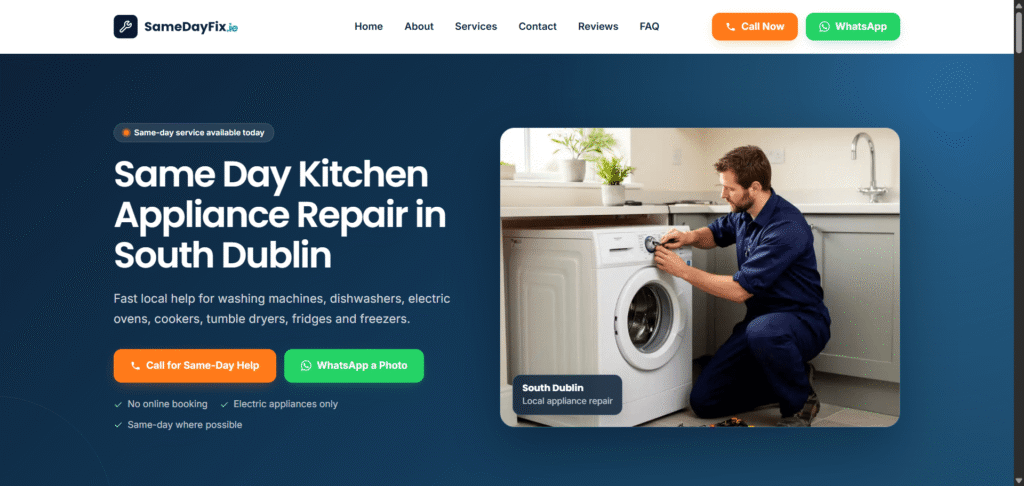
South Dublin appliance repair website
SameDayFix
Urgent service information connected to direct call, WhatsApp and photo-sharing actions for mobile visitors. View case study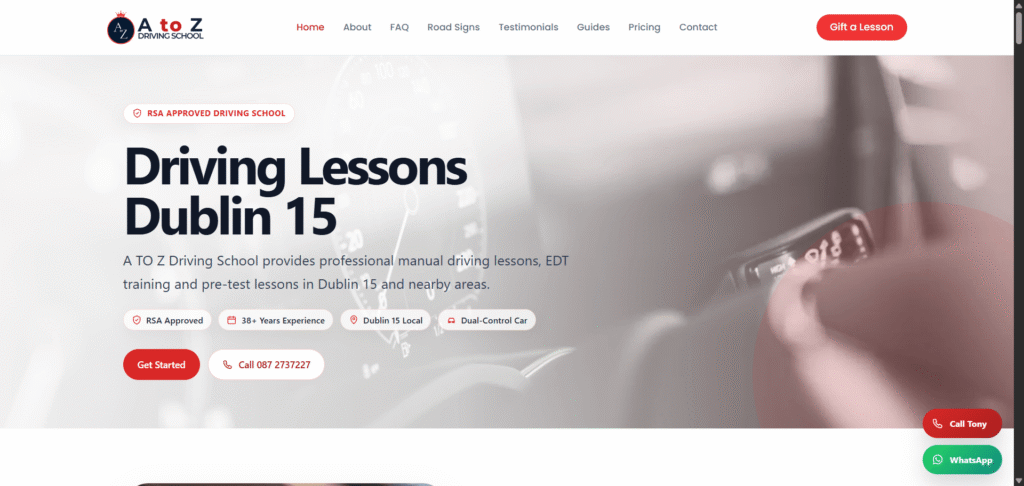
Dublin driving lesson website
A TO Z Driving School
Lesson options, learner information and local relevance organised around a practical booking-enquiry path. View case study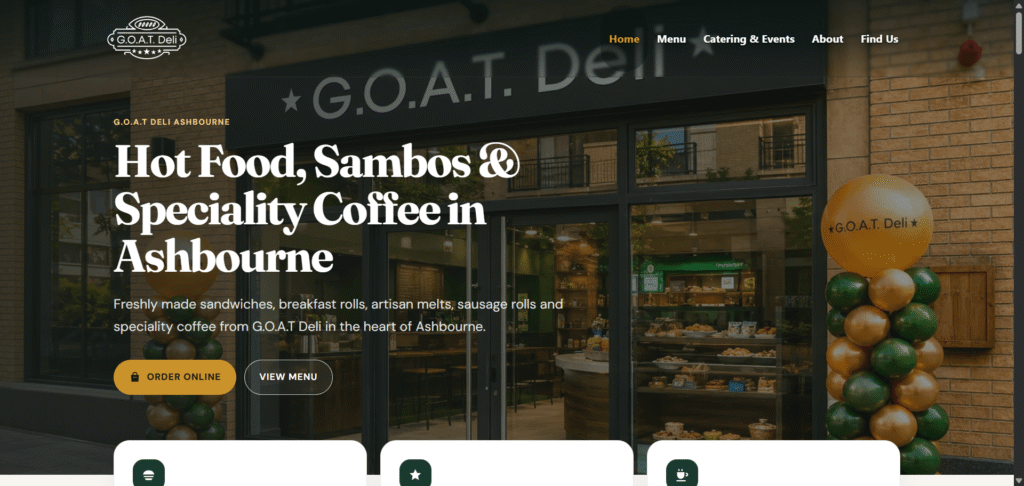
Local food business website
GOAT Deli
Menu, catering, location and contact information arranged so nearby customers can find the relevant next action. View case studyRelated services
Other services that may support this project.
FAQ
Common questions about conversion rate optimisation.
What is conversion rate optimisation?
Conversion rate optimisation, or CRO, is the structured process of improving how effectively suitable visitors complete a meaningful action such as an enquiry, booking, call, registration or purchase. It combines measurement, customer understanding, page review, hypotheses, implementation and verification rather than relying on design opinions alone.
How is a website conversion rate calculated?
A common calculation is conversions divided by the relevant visits or users, multiplied by 100. The definition must stay consistent: a purchase rate, qualified-lead rate and button-click rate are different measures, and session-based and user-based denominators can produce different results.
Does a small website have enough traffic for CRO?
A small website can still benefit from clearer measurement, customer questions, usability review, form testing and high-confidence improvements. Low traffic may not support a reliable controlled experiment in a useful timeframe, so the method should match the available evidence instead of presenting every change as an A/B test.
Do you include A/B testing?
A/B testing can be appropriate when the website has enough relevant traffic and conversions, a clear hypothesis, stable measurement and the ability to run a test for a defensible period. It is not automatically included or recommended for low-volume websites, where stronger evidence may come from direct research and careful before-and-after review.
Can you guarantee a conversion-rate increase?
No. Conversion results are affected by traffic quality, demand, offer, price, competition, seasonality, tracking and sales follow-up as well as the website. I can identify and improve controllable page and journey problems, but I will not invent a guaranteed percentage uplift.
Are analytics, heatmaps or session recordings required?
Not every tool is required. Existing analytics, search data, customer enquiries and direct journey testing may already reveal useful priorities. Behaviour tools can add context when configured responsibly, but privacy, consent, data quality, traffic volume and the risk of misreading individual sessions must be considered.
Is CRO the same as website redesign or SEO?
No. SEO focuses on relevant search visibility and traffic, while CRO focuses on how suitable visitors understand and complete important actions. A redesign changes wider structure or presentation. CRO may recommend focused page changes or show when broader redesign, SEO or speed work is the real dependency.
Can CRO improve service websites as well as ecommerce stores?
Yes. For a service business, conversions may be calls, forms, quote requests, WhatsApp messages or bookings. For ecommerce, the journey can include product discovery, basket, checkout and purchase. The goals and evidence should match the actual business model.
How much does conversion rate optimisation cost in Ireland?
A focused Conversion Review and Roadmap starts from €250, and a defined implementation project starts from €499. Ongoing experimentation, ecommerce and complex multi-step journeys are quoted after the traffic, measurement and technical requirements are reviewed.
Next step
Need this service for your business?
Send me your website link or project idea and I will suggest the most practical next step.