
custom WordPress development Ireland
Custom WordPress development in Ireland for websites that need more than an off-the-shelf plugin.
I plan and build focused WordPress functionality such as calculators, searchable directories, structured content systems, integrations and tailored admin controls. The work starts with requirements and data—not a feature list—so the result fits the real customer journey, editorial workflow and maintenance responsibility without modifying WordPress core.

Irish businesses, publishers and service organisations whose website needs a defined workflow or reusable system that standard pages and carefully selected plugins cannot provide cleanly.
Overview
Custom development should solve a defined operational problem—not simply make WordPress more complicated.
WordPress already provides users, roles, content types, media, revisions, APIs and an administration interface. A custom feature can extend those foundations when a business needs calculations, structured records, specialised searches, controlled submissions, reusable front-end views or a connection with another service. The important decision is whether custom code is justified. A supported existing plugin may be the better choice when it matches the requirements without excessive configuration or lock-in. Custom development becomes useful when the workflow is specific, repeated manual work is creating errors, available products carry substantial unused complexity or the website needs one maintainable source of truth. The result may be a site-specific plugin, an extension to an existing system or a small integration. It should not involve editing WordPress core, pretending every process belongs inside WordPress or promising that software alone will fix an unclear business workflow.
The problem
A poorly defined custom feature can replace one limitation with a more expensive maintenance problem.
Who this is for
Who Custom WordPress Development Ireland is designed for
Businesses with a repeatable digital workflow
For organisations that can explain the users, inputs, rules and desired result of a process currently handled manually or across disconnected tools.
Publishers managing structured information
For calculator, directory, listing, resource or Guide platforms that need reusable records, taxonomies, templates and controlled internal relationships.
Existing WordPress sites with a focused feature gap
For websites where a carefully scoped extension or integration is preferable to replacing the whole platform or installing a large overlapping plugin stack.
What this includes
What custom WordPress development can include
The exact scope depends on your website, goals and budget, but this gives you a clear starting point.
Requirements and feasibility
Translate the business goal into users, inputs, outputs, rules, dependencies, exclusions and acceptance criteria, then decide whether existing software, configuration or custom code is the sensible route.
Data and content architecture
Plan custom post types, taxonomies, metadata, relationships and URL behaviour so information is stored consistently and remains manageable outside an individual page layout.
Custom calculators and decision tools
Implement documented formulas, validation, conditional outcomes, result explanations and reusable display logic, with representative examples used to verify expected calculations.
Directories, filters and searchable listings
Create structured records, useful categories, practical filters, accessible results and indexation rules that reflect what visitors need and what staff can maintain.
Forms and workflow automation
Build or extend submissions, conditional fields, uploads, notifications and status handling while defining what happens on success, failure, duplication and incomplete data.
WordPress admin tools
Provide focused settings, metaboxes, list columns, bulk actions or dashboards that support real editorial tasks without exposing unnecessary technical controls.
Third-party integrations
Connect suitable APIs or services through documented authentication, field mapping, timeouts, error handling and rate-limit assumptions rather than treating an external system as permanently available.
Roles, permissions and data protection
Use capabilities, nonces, validation, sanitisation and escaped output appropriately, then minimise personal information and identify retention or deletion responsibilities where the feature handles user data.
Frontend templates and responsive interaction
Present the feature through reusable templates or blocks with clear states, keyboard access, readable validation and layouts tested on representative mobile and desktop screens.
Performance and technical search considerations
Avoid unnecessary requests and broad asset loading, plan cache behaviour and ensure public routes, links and indexation signals suit the feature rather than creating uncontrolled duplicate URLs.
Testing, release and documentation
Check defined acceptance cases, permissions, failures and compatibility in a safe environment, then record deployment, usage, known constraints and the maintenance route after handover.
Benefits
What your business should gain from this service.
A feature matched to a real business workflow
Less repeated content and manual copying
Cleaner data and editorial control
A smaller, documented maintenance surface
Better separation from themes and page layouts
A defined basis for future improvement
Process
A custom WordPress development process from requirements to a controlled release.
Clarify the problem, users, current process, desired result, examples, constraints and the person responsible for operating the finished feature.
Map data, permissions, calculations, integrations, public routes, admin tasks, edge cases and acceptance tests before selecting the technical approach.
Prepare the specification and estimate, separating required behaviour from optional improvements and identifying external costs, access or client decisions.
Build the agreed feature in a development or staging environment using an architecture appropriate to its size and relationship with the existing website.
Test representative user journeys, calculations, roles, validation, failures, browsers and devices; correct issues against the agreed acceptance criteria.
Release through a controlled process, verify production behaviour and provide usage, limitation, dependency and maintenance notes for handover.
Pricing guidance
Custom WordPress pricing based on requirements, risk and long-term ownership
Custom functionality cannot be priced responsibly from a feature name alone. A calculator with one documented formula is different from a directory with accounts, submissions, payments and external data. The estimate considers discovery, data structures, integrations, user roles, design states, testing, deployment and support expectations. A paid specification can be useful when the project is not yet defined; implementation is quoted separately so the responsibilities and acceptance criteria are visible before development begins.
Requirements and Technical Specification
For turning a defined business idea into workflows, data, acceptance checks and an implementation recommendation.
- Requirements session
- Feature and data specification
- Risks and implementation estimate
Focused Custom WordPress Feature
For one contained calculator, content system, admin workflow or integration with agreed boundaries and testing cases.
- Custom implementation
- Staging and acceptance testing
- Release and usage notes
Advanced WordPress Platform
For directories, multi-step systems, account workflows or connected features spanning several roles, templates or services.
- Phased technical scope
- Integration and permission planning
- Long-term maintenance requirements
Official WordPress development guidance
Build features through plugins and WordPress APIs—not edits to WordPress core.
The WordPress Plugin Handbook explains that plugins extend WordPress without changing core files, and its best-practice guidance covers namespacing, code organisation, conditional loading and avoiding direct file access.
Read the Plugin Handbook introductionReview WordPress plugin best practices
Related work
A real custom WordPress platform built around reusable tools and content
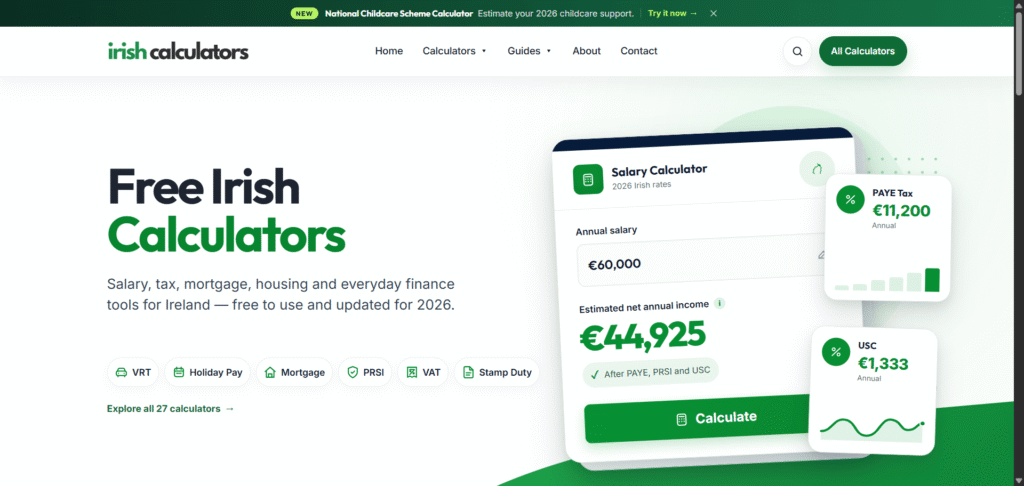
Irish information resource
Irish Calculators
Useful calculators, supporting Guides and clear topic journeys give visitors a more practical way to explore Irish questions. View case studyRelated services
Other services that may support this project.
FAQ
Common questions about custom wordpress development.
What does a custom WordPress developer build?
A custom WordPress developer can create site-specific plugins, calculators, directories, structured content systems, forms, admin tools and integrations. The appropriate solution depends on the workflow, data, users and maintenance responsibility rather than the feature label alone.
Do I need custom development or an existing plugin?
An established plugin is often better when it meets the requirements, is actively maintained and does not introduce excessive complexity or lock-in. Custom development is useful when the workflow is specific, the available products do not fit cleanly or reusable business rules need controlled ownership.
Why keep custom functionality in a plugin instead of the theme?
A theme primarily controls presentation. Business functionality placed in a site-specific plugin can remain available when the design changes and can use WordPress hooks and APIs without editing core files. The exact separation still depends on the feature and website architecture.
Can you build a custom WordPress calculator?
Yes. The scope should document formulas, inputs, units, rounding, limits, validation, result wording and representative expected answers. A calculator also needs accessible controls, responsive presentation and a method for updating rules when its source data changes.
Can you create a directory or searchable listing website?
Yes, when the record types, categories, filters, submissions, permissions, public URLs and moderation process are defined. Large datasets, location search, accounts, payments or third-party feeds may require phased development and specialist infrastructure.
Can a custom WordPress feature connect to another system?
Potentially. The external service must provide a suitable API or supported connection method. Authentication, data mapping, rate limits, privacy, failure handling, provider charges and what happens if the service changes all need to be included in the specification.
How do you handle security in custom WordPress development?
Security is considered throughout the feature through appropriate capabilities, nonces, input validation, sanitisation, escaped output, prepared database access and limited data collection. No software can be declared permanently secure, so updates, access management and ongoing maintenance still matter.
Who owns the custom WordPress code?
Ownership, licensing, access to source files and any third-party dependencies should be stated in the proposal. The scope should also explain what documentation is supplied and which hosting, plugin, API or service costs remain the client’s responsibility.
How much does custom WordPress development cost in Ireland?
A requirements and technical specification starts from €250. Implementation is quote-based because cost depends on the workflows, data, integrations, user roles, design states, testing and deployment risk. A contained feature costs less than a multi-role platform or integration spanning several systems.
Next step
Need this service for your business?
Send me your website link or project idea and I will suggest the most practical next step.